1
Rest Painful Areas
Pause or reduce activities that trigger or worsen your pain.


The rotator cuff surgery recovery timeline often takes four to six months, but some people need longer. You’ll likely wear a sling for several weeks before slowly getting back to your usual activities. Your surgeon will help you decide when it’s safe to drive, work, and lift things again.
Rotator cuff tears are the most common cause of shoulder pain, according to the American Academy of Orthopaedic Surgeons (AAOS). Shoulder pain accounts for about 4.5 million patient visits in the United States each year.
At Sunnyvale Sports Medicine & Orthopedic Center, Dr. John Hibbitts and Dr. Reed Bartz treat shoulder injuries across East Dallas. Our team handles everything from smaller rotator cuff tears to complex repairs.
Your shoulder needs time to heal after surgery. While you may feel better within weeks, the tendon takes much longer to grow firmly back onto the bone.
Most rotator cuff tears are now repaired arthroscopically, using a small camera and thin instruments placed through small incisions. Most repairs are also outpatient procedures, so you’ll usually go home the same day, according to OrthoInfo, the AAOS patient education site.
The first few weeks are mostly about protecting your shoulder. From there, you’ll slowly work on getting your movement and strength back.
| Recovery Period | What Happens | What You Can Expect |
| Weeks 0 to 2 | Protect the repair | Wear your sling and follow movement limits |
| Weeks 2 to 6 | Begin gentle movement | Start approved exercises while protecting your shoulder |
| Weeks 6 to 12 | Improve shoulder motion | Slowly begin moving your arm without help |
| Months 3 to 6 | Build strength | Add light resistance and return to more daily tasks |
| After 6 months | Return to harder activities | Work toward heavier lifting and sports when cleared |
You might move through these stages faster or slower than expected. Someone with a small tear may progress sooner, while a large tear or repeat repair could mean more time in a sling.
The AAOS updated its rotator cuff treatment guideline in August 2025, replacing its 2019 version. The guideline is meant as a reference, not a fixed treatment protocol. AAOS states that care should always be based on each patient’s specific situation and the surgeon’s medical judgment.

Most people need several months before their shoulder feels strong again. OrthoInfo notes that most patients have a functional range of motion and adequate strength by four to six months after surgery. Getting back to heavy work or sports may take six months or longer.
During surgery, your doctor fixes the torn tendon to the bone. That area needs time to heal before it can handle too much strain.
Protecting that healing matters for your long-term result. The 2025 AAOS guideline found moderate evidence that patients whose repairs healed reported better function than those treated with physical therapy alone or whose repairs did not heal.
A few things can affect how quickly you recover:
You might notice less pain before your shoulder has fully healed. That’s why it’s important to follow your doctor’s activity limits, even when you feel better.
Most patients wear a sling for four to six weeks. Your doctor may recommend a shorter or longer period based on the repair. According to OrthoInfo, that decision depends on how severe the injury is, the quality of your tendon tissue, and the type of repair you had.
The sling keeps your arm supported while the tendon starts healing. You’ll usually remove it for certain activities, such as bathing or approved exercises.
The 2025 AAOS guideline looked closely at sling use. After arthroscopic repair of small to medium-sized full-thickness tears, there was a high level of evidence that patients who started moving early and patients who waited up to eight weeks had similar results. Based on moderate evidence, it also notes that some patients can stop using the sling right after surgery. This applies only to selected patients, so your surgeon will decide what fits your repair.
Don’t stop wearing your sling just because your shoulder feels comfortable. Ask your doctor when you can safely leave it off, including at night.
You may feel ready to drive once the pain starts easing. But being comfortable isn’t the same as being able to control a car. Think about whether you could make a sharp turn or react to a sudden stop without hurting your shoulder.
Researchers looked at this issue in a 2025 Journal of Experimental Orthopaedics study. They tracked when 128 patients returned to driving after rotator cuff repair.
The researchers found that:
These numbers show when people in the study started driving. They don’t mean everyone is ready at those times.
Within 1 month
Within 2 months
By 6 months
Average for trips under 5 km
Study of 128 patients. These are reported driving times, not medical clearance guidelines.
Pain and weakness matter, too. In a survey of 54 patients published in the Journal of Surgical Orthopaedic Advances, drivers who still had shoulder pain or weakness were more likely to feel unsafe and to have trouble maneuvering their car. About a third of the patients who had returned to driving said they drove while wearing a sling.
Before you drive, make sure you can:
People with automatic cars returned sooner in the study. Still, your surgeon should clear you before you drive again.
Going back to work depends largely on what you do each day. Someone working at a computer may return sooner than someone who lifts heavy boxes.
A 2025 study published in Shoulder & Elbow followed 83 people after arthroscopic rotator cuff repair. Researchers found that 98.8% returned to work, with a median return time of eight weeks.
However, the type of work made a big difference.
| Type of Work | Median Return Time in the Study |
| Light duties | 4 weeks |
| Moderate duties | 12 weeks |
| Heavy manual labor | 22 weeks |
These are study results, not fixed recovery deadlines. The same study found that people receiving workers’ compensation also tended to return later.
Returning to work also isn’t always the same as returning to full duties. A 2021 review in The American Journal of Sports Medicine pooled 13 studies with 1,224 patients. About 62% returned to their previous level of work, on average about eight months after surgery. The rate was higher for lighter jobs: 94% for light work, compared with 75% for moderate work and 63% for heavy work.
If your job involves lifting, pushing, or working overhead, you may need more time. Some employers can offer lighter tasks while your shoulder heals.
Talk to your surgeon about what your job involves before deciding when to return.
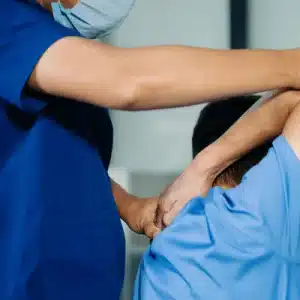
Physical therapy after rotator cuff surgery helps you get your movement and strength back. The goal is to improve how your shoulder works without putting too much stress on the repair.
Your exercise plan will usually include three stages:
Strengthening exercises often begin between 8 and 12 weeks after surgery. Your surgeon may change that timing depending on how well the tendon is healing.
Sticking with therapy early also helps protect your range of motion. OrthoInfo notes that early rehabilitation lowers the chance of permanent stiffness, one of the possible complications after rotator cuff surgery.
The 2025 AAOS guideline also found that, after arthroscopic repair of a small tear, supervised physical therapy did not improve pain or function compared with a well-taught home exercise program. Results were measured from three months up to one year after surgery.
However, larger tears and more involved repairs may need closer care from a therapist.
You’ll spend the first few weeks protecting your shoulder while the tendon starts to heal. Gentle exercises come next, followed by work to regain your strength. Many people make good progress within four to six months, although sports and heavy lifting may have to wait longer.
Large tears often take more than six months to recover enough for demanding activities. Your doctor may recommend longer sling use and a slower exercise plan. Healing also depends on the tendon condition and the type of repair.
Four to six weeks is a common recommendation. Some people can reduce sling use sooner, while others need it longer. Follow your surgeon’s instructions rather than stopping when the pain improves.
An automatic car may make driving easier because you don’t have to change gears manually. However, you still need enough shoulder movement to steer and react safely. Wait until you’re out of your sling, off medicines that affect driving, and cleared by your surgeon.
You may be able to return sooner if your job mostly involves sitting at a desk. Tasks that require lifting, pushing, or reaching overhead could still be off-limits. Tell your surgeon what you do at work so they can help you decide which duties are safe.
You’ll need a recovery exercise plan, but regular clinic visits aren’t necessary for everyone. Some patients with small tears do well with exercises taught during a single therapy visit. Others benefit from ongoing sessions, especially after more complex repairs.
A little soreness can happen when you start a new exercise or use your arm more. Sharp pain, worsening symptoms, or sudden weakness are reasons to stop and call your surgical team. You should also seek prompt medical advice if you develop a fever or notice fluid coming from your wound.
There’s no reason to rush back into heavy lifting or sports just because your shoulder feels better. Give the repair time to heal, and check with your surgeon before doing more than your current plan allows. If shoulder pain is keeping you from your usual activities, Sunnyvale Sports Medicine & Orthopedic Center can help. Book a shoulder consultation today to discuss your symptoms and find out what treatment may work for you.
Hip replacement recovery time varies from one person to another. Many patients are able to stand and begin walking with assistance within the first day after surgery. Over the following weeks, everyday movements usually become easier, although rebuilding strength and endurance can take several months.
Hip replacement is also performed frequently in the United States. According to the American Academy of Orthopaedic Surgeons (AAOS), more than 450,000 total hip replacements are completed each year, based on Agency for Healthcare Research and Quality data.
Your age is only one piece of the recovery picture. Overall health, strength before surgery, the surgical approach, and how closely you follow your rehabilitation plan can all influence how quickly you progress.
Looking at total hip replacement recovery week by week can make the process easier to understand. Still, these time frames should be treated as general guidance rather than deadlines that every patient must meet.
| Time Frame | What You May Notice |
| Days 0–3 | You may begin walking with a walker, cane, or crutches. Swelling and discomfort are expected. |
| Days 4–7 | Short walks and basic exercises continue. Pain may gradually become easier to control. |
| Week 2 | Walking can feel more stable, although bruising and swelling may remain. |
| Weeks 3–6 | Routine activities often require less effort. Some people begin using less walking support. |
| Months 2–3 | Balance, endurance, and leg strength continue improving. More everyday activities may feel comfortable again. |
| Months 3–6 | Many people are able to return to low-impact exercise, hobbies, and a more familiar daily routine. |
The American Association of Hip and Knee Surgeons (AAHKS) explains that most patients are already walking with crutches, a walker, or a cane by the day after surgery. Moving from those devices to a cane or eventually walking without support often happens during the first month or two.
There is little benefit in trying to beat someone else’s timeline. Being able to walk safely and comfortably matters more than reaching a particular milestone by a specific week.
By around six weeks, AAHKS reports that many patients can manage most routine daily activities. Much of their strength and endurance may return by about three months. AAOS places light daily activity in roughly the three- to six-week range, while Cleveland Clinic notes that some patients need six to 12 weeks before they can use the hip without restrictions.
Hospital stays have also become shorter for selected patients. Some people who meet the appropriate health and safety criteria can have the operation and return home that same day.
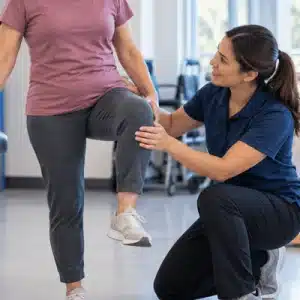
Recovery can look very different even for two people having the same procedure. Several factors can change how quickly someone becomes comfortable and independent again.
• Your health before surgery. Conditions such as poorly controlled diabetes, heart disease, congestive heart failure, chronic lung or kidney disease, and sleep apnea may affect both surgical planning and recovery.
• How well you moved beforehand. Someone who was already walking independently and had good leg strength may have an easier starting point after surgery.
• Balance and neurologic function. Problems in either area can make the early stages of walking and rehabilitation more challenging.
• Help available at home. Reliable support can be especially important during the first days after surgery and may even affect whether outpatient surgery is considered suitable.
• Participation in rehabilitation. Recovery involves more than attending therapy appointments. Regular home exercises and following the therapist’s recommendations also play an important role.
There is no universal hip replacement recovery time that 70-year-old patients should expect. Two people of the same age may recover at very different speeds depending on their health, mobility, and level of independence before surgery.
An active 70-year-old with good balance and few health issues, for instance, might advance more quickly than a younger patient with limited mobility or multiple chronic health issues. According to the Cleveland Clinic, recovery may occasionally take longer for adults 70 years of age and older, but age alone does not dictate the result.
Using a walker or cane during the early weeks is common for older adults. One patient may stop needing it relatively quickly, while another may benefit from keeping the added support for longer.
Do not stop using a walking aid simply because a certain number of weeks have passed. Your surgeon or physical therapist can judge whether your balance, strength, and walking pattern are ready for the change.
Age also does not mean the implant will necessarily fail sooner. In fact, younger patients may face a greater lifetime chance of revision surgery simply because they are likely to live with and use the artificial joint for more years.
It is normal to wonder what level of discomfort is expected after surgery. During early recovery, soreness, bruising, swelling, and aching around the hip are all common.
Pain is usually most noticeable during the first several days. From there, it should generally become more manageable rather than steadily intensifying.
Common symptoms can include:
AAOS notes that activity-related discomfort and some nighttime pain can continue for several weeks.
According to Johns Hopkins Medicine, by about 12 weeks, pain may drop to about a 1 or 2 on a 10-point scale. A persistent pain score of six or higher should be discussed with a physician as it may indicate an infection or other complication. After a hip replacement, the majority of patients eventually report significant pain relief, according to AAHKS.
Swelling may linger even after pain has improved. AAOS describes swelling as moderate to severe in the beginning, followed by milder swelling that may continue for three to six months. Some degree of swelling can occasionally remain for as long as a year.
If your care team recommends it, icing and elevating the leg may help control swelling. Pain medication should be taken only according to your surgeon’s instructions.
Contact your surgeon if pain suddenly becomes intense or begins getting worse instead of better. Fever, increasing redness, drainage from the incision, or new difficulty moving the hip should also be evaluated.
At 2 weeks after hip replacement surgery, many patients notice that basic movement is starting to require less effort. That does not mean recovery is complete. Swelling, stiffness, bruising, and soreness may still be part of everyday life.
Around this stage, you may be able to:
A follow-up appointment often takes place around this time so the incision can be assessed. Some stitches are absorbable, while others must be removed. Staples or clips may also need to come out.
AAOS states that stitches or staples are commonly removed at approximately two weeks after surgery.
Showering depends on the type of dressing and how the incision was closed. Rather than following a generic date, use the wound-care instructions supplied by your surgical team.
AAOS generally advises keeping the incision dry until it has sealed properly. Johns Hopkins Medicine notes that the incision may take about six weeks to heal fully and that baths or swimming are typically postponed until healing is complete.
This is also when some patients begin asking whether they can move from a walker to a cane. AAOS suggests making that transition based on walking ability rather than the calendar. Being able to stand and walk for more than about 10 minutes is one factor that may be considered.

There is no single date when every part of normal life resumes. Work, driving, exercise, and household activities each have their own considerations.
Work
The type of job matters considerably. AAHKS gives a general range of about four to six weeks for sedentary work, while people with physically demanding jobs may need much longer and can take up to three months to fully recover.
Johns Hopkins Medicine provides somewhat shorter estimates in some cases, including around two weeks for desk-based work and approximately six weeks for more physically demanding jobs.
Someone who spends the day sitting at a computer will usually have different requirements from a worker who lifts heavy objects, climbs repeatedly, or remains on their feet for hours.
Driving
Returning to driving depends less on the calendar and more on whether you can operate the vehicle safely.
AAOS advises waiting until opioid pain medication is no longer needed and leg strength and reaction time have recovered sufficiently. AAHKS notes that many surgeons allow driving at roughly four to six weeks.
Some patients may return earlier. Johns Hopkins Medicine reports that driving may resume in about one month following right-sided hip surgery and potentially within one to two weeks after left-sided surgery in suitable patients. The difference is partly because the right leg operates the accelerator and brake pedals.
Never use the calendar alone to decide whether you are ready to drive.
Exercise and Sport
Movement is an important part of rehabilitation, but not every activity puts the same amount of stress on the new hip.
AAOS includes walking, cycling, golf, doubles tennis, pickleball, and swimming after the incision has healed among activities that may be appropriate. Walking is useful, but it should not replace the exercise program prescribed by your rehabilitation team.
Higher-impact activities are often discouraged. These may include jogging, basketball, racquetball, singles tennis, and skiing.
AAHKS advises that returning to sports is generally not recommended until around the third month. Your surgeon should give you activity recommendations based on your specific procedure and recovery.
Everyday Life
Hip precautions, when prescribed, are often eased after roughly six to eight weeks, according to AAOS guidance. Many patients also return to sexual activity within several weeks once movement is comfortable enough.
Dental care is another topic worth discussing with your orthopedic surgeon. Some doctors recommend preventive antibiotics before certain dental procedures for selected patients, while recommendations can vary depending on individual circumstances.
Many people are able to handle most routine daily activities again by about six weeks. That does not mean the hip has finished recovering. Strength, stamina, balance, and comfort may continue improving for several more months. Your health before surgery, the procedure itself, and your activity level can all affect the timeline.
Aching, swelling, bruising, and general soreness are common during the first few weeks. You may also notice more discomfort after exercising or when trying to sleep at night. The overall trend should be toward improvement. Pain that suddenly becomes much stronger or consistently worsens should be discussed with your surgeon.
By the second week, walking may already feel a little easier, although many patients still use a cane or walker. Swelling, stiffness, and soreness can remain. This is an important time to continue prescribed exercises and follow wound-care and medication instructions closely.
There is no exact week when every patient should put the cane away. Some people require less assistance during the first month or two, while others need it longer. Balance, leg strength, comfort, and the quality of your walking pattern should guide the decision.
Four to six weeks is a common estimate, but some patients may be cleared sooner or later. Before driving again, you should have enough leg control to operate the pedals safely, react quickly when needed, and no longer require opioid pain medication.
Yes. Some patients can have hip replacement surgery and return home the same day. Outpatient surgery is generally reserved for people whose overall health, home environment, available support, and surgical plan make same-day discharge appropriate.
Hip replacement recovery happens in stages rather than all at once. The biggest changes may be noticeable during the first several weeks, but strength and confidence can continue building well beyond that point.
Following your surgeon’s recommendations, staying appropriately active, completing your rehabilitation exercises, and giving the joint enough time to heal can all support a smoother recovery.
If hip pain is interfering with walking, sleeping, working, or normal daily activities, book a consultation with Sunnyvale Sports Medicine and Orthopedic Center. A joint replacement surgeon can evaluate your symptoms and discuss which treatment options may be appropriate for you.
ACL surgery recovery time is not the same for everyone. Some people are moving around well within a few weeks. Others need more time, especially if the injury involved more than the ACL.
Running usually comes later in rehab. Sports such as soccer, basketball, and football take even longer because they involve cutting, jumping, and quick changes in direction. For many athletes, that means waiting nine to 12 months before a full return.
A scoping review of 201 studies found that the most commonly reported clearance point for running was a median of 12 weeks after surgery, yet fewer than one in five of those studies reported any clinical, strength, or performance criteria at all.
A knee injury specialist does not look at the calendar alone. Swelling, strength, knee motion, balance, and control all help show how well recovery is going.
Walking around the house and returning to sport are very different recovery goals. That is why ACL rehab is usually broken into stages.
Here is a rough timeline:
| Recovery Goal | Common Timeframe |
| Walking with less support | First few weeks |
| Driving after right-knee surgery | About 4 to 6 weeks |
| Starting a running program | Around 3 months or later |
| Returning to cutting or pivoting sports | Often 9 to 12 months |
These dates are not deadlines. Some people reach a milestone sooner. Others take longer because of swelling, weakness, limited motion, or another knee injury.
It also helps to set expectations about the destination, not just the route. A systematic review and meta-analysis of return-to-sport outcomes found that 81 percent of patients returned to some form of sport, 65 percent returned to their preinjury level, and 55 percent returned to competitive sport.
The American Academy of Orthopaedic Surgeons recommends checking knee function before an athlete returns to sport. Strength and movement tests can help with that decision.
There is also a good reason not to rush. A 2020 study in the Journal of Orthopedic & Sports Physical Therapy found more second ACL injuries among young athletes who returned before nine months.
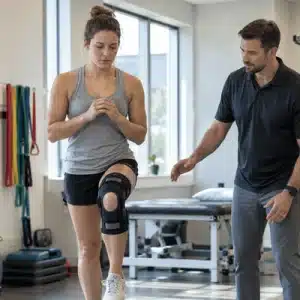
An ACL reconstruction protocol usually starts with basic goals. Early on, the focus is getting swelling down, straightening the knee, and waking the thigh muscles back up.
As the knee improves, the work gets harder.
Aspetar’s ACL rehab guideline supports using recovery goals before a person starts running. The knee should have good motion, little swelling, and enough strength.
The guideline, published in the British Journal of Sports Medicine in 2023, also asks athletes to restore their own preoperative absolute strength values where those are known, rather than relying on side-to-side symmetry alone. Symmetry can look healthy when both legs have lost strength.
The timeline is only part of the plan. Two people can be three months out from surgery and still be at very different stages.
An ACL and meniscus surgery recovery timeline depends a lot on what happened to the meniscus.
Sometimes, damaged tissue is trimmed. In other cases, the meniscus is repaired and needs more time to heal.
Combined injuries are the rule rather than the exception. Lateral meniscus damage is present in more than half of acute ACL ruptures, while medial meniscus involvement is more common in knees that have been ACL-deficient for a longer period.
The 2024 EU-US Meniscus Rehabilitation Consensus notes that not every repair needs the same restrictions. Some stable vertical repairs may barely change the ACL rehab plan. Other repairs can require limits on knee motion or weight-bearing for several weeks. The consensus, run jointly by ESSKA, AOSSM, and AASPT and published in 2025, sets out how far apart those plans can be:
Recovery may be slower after:
This is why one timeline cannot apply to every patient with both ACL and meniscus damage.
An ACL tear does not always lead to surgery. Some people regain good function through physical therapy and changes in activity.
Torn ACL recovery time without surgery depends on how stable the knee feels and what the person wants to get back to.
ACL reconstruction and exercise-based rehabilitation were examined in a 2025 review published in Sports Medicine. There was no discernible variation in return-to-sport rates, according to researchers. They also pointed out that the quality of the evidence was poor or extremely poor.
Rehab without surgery may make sense when:
Surgery may become more likely when the knee keeps giving way. It may also be considered for athletes who want to return to sports with sharp turns, jumps, or fast direction changes.
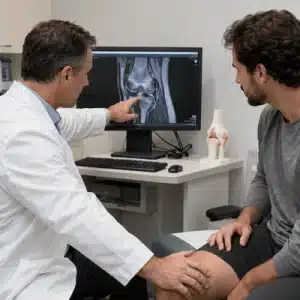
The choice between ACL repair vs reconstruction depends on the tear and the condition of the remaining ligament.
ACL reconstruction uses a graft to replace the torn ligament. It is still the most common operation for an ACL tear.
ACL repair tries to keep more of the original ligament.
The BEAR Implant from Miach Orthopaedics is one example. Instead of replacing the ACL with a graft, it is designed to help the torn ligament heal.
It received De Novo authorisation from the US Food and Drug Administration in December 2020 for complete ACL tears in skeletally mature patients aged 14 and older who still had an ACL stump attached to the tibia. On 10 March 2025, the FDA cleared an expanded indication that includes partial tears and children and adolescents of any age, provided there is enough bone in the femoral and tibial epiphyses to avoid disturbing the growth plates.
BEAR is not an option for every injury. The tear itself, remaining ACL tissue, age, other knee damage, and activity goals all matter.
A knee surgeon can review those details and explain which option is more suitable.
Many athletes need around nine to 12 months before returning to pivoting sports. Some need longer. The final decision should also include strength and movement testing.
Many people begin walking with crutches soon after the operation. How much weight you can put on the leg depends on the procedure. A meniscus repair may change those instructions.
Six months may still be too early for demanding sports. Young athletes have shown a higher risk of another ACL injury when they return too soon. Strength and movement quality should also be checked.
No. Some people do well with physical therapy alone. Surgery is more likely when the knee remains unstable or repeatedly gives way.
Running often begins around three months or later. Before that happens, the knee should move well, have little swelling, and regain enough strength. Your rehab team should decide when running is safe.
Not everyone does. AAOS guidance does not support routine functional bracing after an isolated primary ACL reconstruction. A brace may still be used when another injury or procedure calls for it.
ACL recovery does not follow one exact schedule. Walking may come back fairly quickly, while running and sports take much longer. What matters most is how the knee is moving, how strong it feels, and what activities you want to return to.
If you have an ACL injury in Sunnyvale or East Dallas, book an appointment with Sunnyvale Sports Medicine and Orthopedic Center for a knee evaluation and a recovery plan that fits your needs.
Can you walk with a torn ACL? In many cases, yes. Walking may become easier once the first round of pain and swelling starts to settle. But a knee that feels fine during a short walk may still be unstable when you turn, pivot, or change direction.
That is why being able to walk does not mean the injury is minor. Here is what a torn ACL can feel like, how doctors assess it, and what recovery may look like.
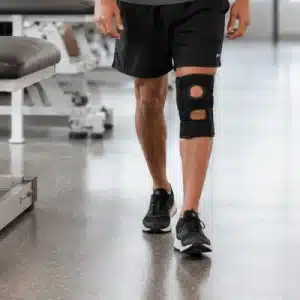
Many people can walk after an ACL tear. Some can put weight on the leg within days. Others need crutches because the knee hurts, swells, or feels unsteady.
Everybody experiences symptoms differently, according to the American Academy of Orthopedic Surgeons. Some people report that their knees give way when they move normally in their daily lives. Some only notice the issue when they pivot, run, or cut.
Early on, it's ideal to:
Straight walking puts less stress on the ACL than twisting does. That is why walking can feel manageable even with a serious tear.
If you are wondering what a torn ACL feels like, the first signs are often hard to miss.
Common symptoms include:
A pop or snapping feeling inside the knee
Sudden pain
Swelling that builds within a few hours
Trouble fully bending or straightening the leg
Pain while putting weight on the knee
A loose or unstable feeling
The ACL helps control the forward movement of the shinbone. It also helps steady the knee when the body turns.
A doctor may be able to diagnose the injury from your symptoms and a knee exam. An MRI can help show the ACL more clearly and check for other damage, such as a meniscus tear.
Walking mostly moves the knee forward and back. Twisting and pivoting place much more stress on the ACL.
That is why someone with a torn ACL may walk across a room without much trouble, then feel the knee give way during a quick turn.
Repeated episodes of buckling can also put the meniscus and cartilage at risk. AAOS notes that long-term instability is linked with more damage inside the knee.
Pain alone is not a good test of whether the knee is ready for sports.
There is no single treatment that works for everyone. The right plan depends on the tear, your symptoms, your activity level, and whether other parts of the knee were injured.
| Treatment | Who It May Suit | What It Can Include |
| Nonsurgical care | Stable tears or lower-demand activity | Physical therapy, strength work, activity changes, and sometimes a brace |
| ACL reconstruction | Unstable knees or people returning to pivoting sports | Surgery using a tendon graft |
| Selected ACL repair | Certain tear types | Repair of the existing ligament in carefully chosen cases |
Physical therapy is a key part of treatment either way. Building strength around the knee can improve control and help protect the joint.
When surgery is needed, ACL reconstruction is still the most common choice. The damaged ligament is replaced with a tendon graft.
Some patients may now have other options. One is the BEAR implant, which is designed to help the patient’s own ACL heal. It is only used in selected cases and is not right for every tear.
ACL tear recovery time varies from person to person. Your progress matters more than hitting a certain date on the calendar.
| Stage | Main Focus |
| Early recovery | Reduce swelling and regain movement |
| Rehab | Improve walking, strength, and balance |
| Later rehab | Build control for running and jumping |
| Return to sport | Pass strength and movement tests before full activity |
After ACL reconstruction, return to high-demand sports often takes about 9 to 12 months or longer.
Doctors and physical therapists may look at:
Returning too soon can raise the chance of another injury, especially in younger athletes.
For people treated without surgery, rehab may still take several months. If the knee keeps giving way, surgery may be discussed later.
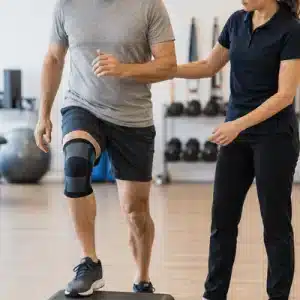
Most people can return to an active life after an ACL injury with the right care and rehab.
Still, an ACL tear can raise the risk of knee arthritis later in life. That risk may be higher when the meniscus or cartilage is also damaged.
Strength training, balance work, and good movement habits can help support the knee after recovery.
Some people develop severe arthritis many years after a knee injury. In those cases, an orthopedic surgeon may discuss treatments such as total knee replacement. A torn ACL does not mean knee replacement will be needed.
Some people can, but walking may be painful at first. Swelling can also make the knee feel stiff or weak. Use support if the knee feels unstable. Avoid forcing yourself to walk through severe pain.
Pain may be lower after a week, but the knee can still feel loose. Swelling may still come and go. Quick turns or stairs may make the instability more obvious. Symptoms can differ from one person to another.
Careful walking may be fine if the knee feels stable. The bigger concern is twisting or letting the knee buckle again and again. Other injuries may also affect how much weight you should put on the leg. Follow the advice given by your doctor or therapist.
Some ACL tears can heal or become stable without surgery. Partial tears may do well with rehab alone. Some complete tears can also be treated without surgery if the knee stays steady. The right choice depends on the person and the injury.
Recovery without surgery often takes several months. Therapy focuses on strength, movement, and knee control. Some people return to low-impact activity sooner than others. Ongoing instability may mean surgery is worth considering.
See an orthopedic doctor if your knee pops, swells quickly, locks, or keeps giving way. You should also get checked if you cannot put weight on the leg. An exam can help find ACL, meniscus, or cartilage damage. Early care can make the treatment plan clearer.
Can you walk with a torn ACL? Many people can, but that does not mean the knee is fully stable. The safest next step is to have the injury checked and follow a rehab plan that fits your needs.
If your knee keeps swelling, buckling, or feeling unstable, book an appointment with Sunnyvale Sports Medicine and Orthopedic Center for a full knee evaluation and treatment plan.
Knowing when not to have rotator cuff surgery can help you avoid an operation you may not need. An MRI may show a tear, but the scan is only one part of the decision. Your pain, strength, health, tear size, and daily routine all matter. Many people with gradual tears improve through therapy and careful activity changes.
During a standard rotator cuff surgery, the surgeon places the torn tendon back against the upper arm bone. Small anchors may hold it in place while it heals.
Nonsurgical care has a different goal. It does not close the tear. Instead, it helps ease pain, restore motion, and strengthen the muscles that support the shoulder.
The American Academy of Orthopedic Surgeons updated its recommendations for rotator cuffs in 2025. The group found that both physical therapy and surgery can improve function and lessen pain in some full-thickness tears.
| Treatment | Main purpose | What to keep in mind |
| Nonsurgical care | Reduce pain and improve use | The tear may remain or grow |
| Rotator cuff surgery | Repair the torn tendon | Recovery takes several months |
| Follow-up care | Check pain, strength, and motion | Repeat exams may be needed |
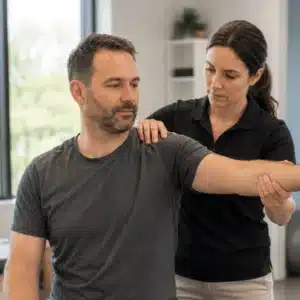
Some rotator cuff tears are found by chance. A scan may have been ordered for stiffness, arthritis, or another shoulder issue.
Surgery may not be needed when you have little pain, good strength, and normal arm use. Your doctor may choose to watch the tear and check for changes over time.
Follow-up still matters. Some painless tears become larger or start causing symptoms later.
A strong case for continuing nonsurgical treatment is consistent improvement. You may have better sleep, more mobility, more strength, or less pain at night.
Adults with progressive, full-thickness tears were monitored in a 2024 MOON Shoulder Group study. Over 70% had not opted for surgery after a decade.
A lot of people start with guided therapy for six to twelve weeks. That timetable is not set in stone. The plan is influenced by your age, type of tear, work demands, and progress.
A partial tear affects only part of the tendon. It does not go through the full thickness.
Low- and mid-grade partial tears often receive physical therapy first. Treatment may also include changes to lifting, sports, or other painful tasks.
Surgery may be discussed when pain or weakness continues after a full course of care. The 2025 AAOS guideline notes that research on these tears is still limited, so treatment must fit the individual patient.
Most rotator cuff repairs are planned procedures. This gives your care team time to address health risks before surgery.
Poor blood sugar control, an active infection, or other medical concerns may delay an operation. Your surgeon may also wait if you cannot use a sling or attend therapy after the procedure.
A repair needs protection during the early healing stage. It may be safer to wait until you have the right health and home support in place.
A long-term tear may pull away from the bone. The tendon can become thin, while the nearby muscle may shrink or develop fatty changes.
In these cases, a normal repair may not hold well. Physical therapy may still reduce pain and help you use the arm.
Other treatments may be considered when the function remains poor. Options depend on your age, joint health, strength, and personal goals.
People often search for how to heal a torn rotator cuff naturally because they want to avoid surgery. Most full tendon tears do not seal themselves back onto the bone. Even so, the shoulder can feel and work much better without an operation.
A nonsurgical plan may include:
Regular PRP injections for rotator cuff tendinopathy or partial tears are not recommended by the 2025 AAOS guideline. Before purchasing any treatment marketed as a tendon cure, find out what the evidence indicates.
Do not copy random shoulder exercises from social media when pain is sharp. The wrong movement may make symptoms worse. A doctor or physical therapist can show you what is safe.
Waiting is not always the best choice. Arrange a prompt shoulder exam after a fall, collision, or sudden pulling injury.
You should also seek care when you have:
These symptoms do not guarantee surgery. They do imply that more treatment options could be preserved by early care.
The AAOS lists recent injury, major weakness, and larger tears among the factors that may make surgery more useful.
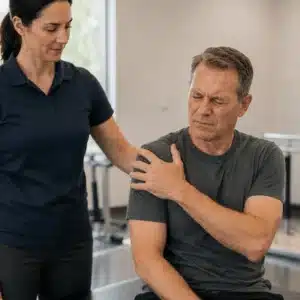
Rotator cuff surgery recovery takes place in stages. At first, the repair must be protected. Most patients wear a sling and limit active shoulder use.
Guided motion usually begins before strength work. The exact timing depends on the size of the tear and the surgeon’s plan.
Many patients regain useful motion and strength within four to six months. Full recovery may take up to a year. Healing speed, work duties, age, and tear size can all affect the timeline.
Pain and function may improve with therapy, rest, and activity changes. The tear may still remain. Some tears grow over time, so your doctor may suggest repeat exams or imaging.
Most full-thickness tears do not close back onto the bone by themselves. However, nearby muscles can become stronger. This may reduce pain and make the shoulder easier to use.
No. Some small or medium tears respond well to therapy. Surgery may matter more after a recent injury, major weakness, or failed nonsurgical care.
Six to twelve weeks is a common starting period for gradual tears. You may continue longer when pain and function keep improving. New weakness or a recent injury should be checked sooner.
Yes. Some tears become larger and develop muscle changes. These changes may lower the chance of a strong repair. Regular follow-up helps your doctor spot problems early.
Useful motion and strength often return within four to six months. Full recovery may take several more months. Some patients need up to one year before the shoulder feels fully restored.
There is no single rule for choosing therapy or rotator cuff surgery. The right choice depends on your symptoms, tear, health, and goals. Book a shoulder evaluation with Sunnyvale Orthopedics today to get a treatment plan built around your needs.
Shoulder pain can make simple tasks hard. Reaching for a shelf, getting dressed, or sleeping on one side may suddenly feel painful. A Dallas shoulder specialist can check what is causing the pain and help you choose the right treatment. See one if pain lasts more than 2 weeks, wakes you at night, or makes it hard to lift your arm. After a fall, crash, or sports injury, get urgent care if the shoulder looks out of place, swells quickly, or will not move.
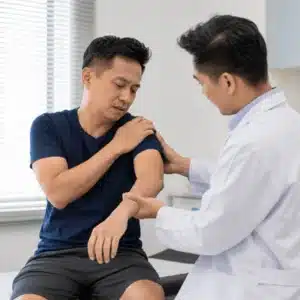
Urgent care is not necessary for every sore shoulder. Rest, ice, and gentle movement can help ease a mild strain. An appropriate examination is necessary for pain that recurs frequently or restricts day-to-day activities.
Make an appointment with a shoulder physician in Dallas if you observe:
If you experience pain following a fall, auto accident, or sports injury, get same-day care. If the shoulder appears uneven, feels unsteady, or you are unable to raise your arm, this is more critical.
A primary Dallas shoulder specialist can help with minor aches. A shoulder specialist is often the better choice for repeat pain, complex injuries, and problems that may need imaging, injections, or surgery.
The shoulder moves more than the majority of the body's joints. You can reach, lift, throw, and carry more easily with that broad motion. Additionally, it increases the likelihood of straining or injuring the joint.
Typical reasons consist of:
Shoulder pain can happen during sports, work, or daily chores. Tennis, swimming, baseball, lifting boxes, and overhead work are common triggers. Children and teens should be checked sooner if pain lasts, since growth plates can also be injured.
A specialist will first ask how the pain started. They may ask what movements hurt, what makes symptoms better, and whether there was an injury.
The exam often checks:
Imaging may be used when the exam points to a deeper injury or when pain does not improve.
| Test | What It Helps Show |
| X-ray | Fractures, arthritis, and bone alignment |
| MRI | Rotator cuff, labrum, tendons, soft tissue |
| Ultrasound | Tendon movement and some soft tissue tears |
| CT scan | Complex fractures or bone detail |
The American College of Radiology notes that imaging should match the injury, symptoms, and exam findings. An MRI is not always the first step for new shoulder pain without red flags.
Many shoulder problems improve without surgery. The right plan depends on the cause, pain level, and how much the injury affects daily life.
Simple measures may help ease new pain, swelling and muscle tightness.
Pause or reduce activities that trigger or worsen your pain.
Use a wrapped cold pack for recent pain or visible swelling.
Warmth may help relax tight, stiff or tense muscles.
Use over-the-counter medicine only when it is safe for you.
Begin comfortable range-of-motion exercises without forcing movement.
Common first steps include:
Physical therapy is often a key part of recovery. It can help improve motion, build rotator cuff strength, support better posture, and lower the chance of another injury.
Injections may help when pain makes therapy difficult. Steroid injections can calm swelling and reduce pain for some shoulder problems. Platelet-rich plasma, or PRP, may also be discussed in selected cases. Research shows results can vary, so your doctor should explain the possible benefits, limits, risks, and costs.
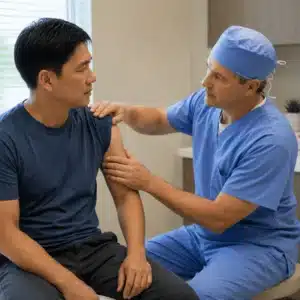
A Dallas shoulder surgeon may discuss surgery when pain continues after non-surgical care or when imaging shows serious damage. Surgery may also be considered for major tears, repeat dislocations, severe arthritis, or injuries that affect work and daily life.
Common procedures include:
Arthroscopic surgery uses small cuts and a camera to view the joint. It may allow the surgeon to repair damaged tissue with less cutting than open surgery. Even with smaller cuts, recovery still takes time. Most patients need guided therapy after the procedure.
Current shoulder care also includes 3D surgical planning, outpatient shoulder replacement for selected patients, and FDA-cleared spacer options for some massive rotator cuff tears that cannot be repaired. These tools are not right for every patient. They help the surgeon plan care based on the injury, age, activity level, and health history.
Sunnyvale Sports Medicine and Orthopedic Center serves patients in Sunnyvale, Dallas, and nearby areas. Dr. John M. Hibbitts is a Texas board-certified orthopedic surgeon with more than 25 years of experience. Dr. Reed Bartz also brings fellowship training in sports medicine and shoulder surgery. The team treats shoulder injuries with both non-surgical care and surgical options.
See a specialist if pain lasts more than 2 weeks, gets worse, or limits your movement. Night pain is also a reason to get checked. Sudden weakness, swelling, or deformity after an injury needs urgent care.
No. Shoulder pain can come from tendon irritation, bursitis, arthritis, stiffness, or pain in the neck. A tear is more likely when pain comes with weakness or trouble lifting the arm. A proper exam helps find the cause.
Mild pain may improve with rest, ice, heat, and gentle movement. Avoid lifting, reaching, or participating in sports that make the pain worse. See a doctor if symptoms do not improve or keep coming back.
A Dallas shoulder doctor checks your symptoms, movement, strength, and exam findings. They may order imaging if needed. Treatment may include therapy, medicine, injections, or surgery.
No. Many people improve with therapy, activity changes, and pain control. Dallas shoulder surgery is usually reserved for larger tears, repeat instability, severe arthritis, or pain that does not improve with other care.
Recovery depends on the injury and the procedure. Smaller repairs may allow light activity sooner. Larger rotator cuff repairs or shoulder replacement can take several months of therapy.
Shoulder pain is common, but lasting pain should not be ignored. Early care can help protect motion, strength, and daily comfort. To learn more, book an appointment with a Dallas shoulder specialist at Sunnyvale Sports Medicine and Orthopedic Center today.
A Dallas slap tear is a tear in the top part of the shoulder labrum. This is where the biceps tendon attaches. Most people do not need surgery right away. We often start with rest, medicine, physical therapy, and sometimes injections. Surgery may be needed when pain persists, the shoulder feels loose, or trauma causes another injury, such as a Dallas shoulder fracture.
A SLAP tear and a fracture are not the same injury. A fracture is a broken bone. A SLAP tear is soft tissue damage. Both can happen after the same fall, hit, or sports injury.

The first step for most SLAP tears is nonsurgical care. The American Academy of Orthopaedic Surgeons says most SLAP injuries start with nonsurgical treatment.
Care may include:
The National Athletic Trainers’ Association recommends 3 to 6 months of nonsurgical care before surgery is considered. Therapy often works on the rotator cuff, shoulder blade muscles, motion, and shoulder control.
The labrum is a ring of cartilage around the shoulder socket. It helps keep the ball of the upper arm bone centered in place.
SLAP means Superior Labrum Anterior to Posterior. This means the tear runs across the top part of the labrum. It can affect the biceps anchor.
Common signs include:
Clicking alone does not prove a SLAP tear. We compare your symptoms, exam, and imaging before making a diagnosis.
A Dallas slap tear can happen from one injury or from repeated stress.
| Cause | Common Example |
| Sudden trauma | Falling on an outstretched arm |
| Sports stress | Throwing, serving, lifting, or swinging |
| Shoulder instability | A dislocation or repeated slipping |
| Age-related wear | Labral fraying in middle age |
A fall, car crash, or direct hit can also cause a Dallas shoulder fracture. This is why X-rays are often needed after trauma.
A SLAP tear is not diagnosed from one test alone. We look at the full shoulder, not just the MRI report.
Diagnosis may include:
We inquire as to how the discomfort began and what exacerbates it.
We check shoulder motion, strength, stability, and tenderness. A doctor may also use several examination maneuvers:
These tests provide clues, but none can confirm a SLAP tear by itself. Results must be considered alongside the patient’s history, other examination findings, and imaging.
X-rays are useful in detecting joint alignment, arthritis, and fractures.
Soft tissue is examined using MRI. Dye is used in an MR arthrogram to make the labrum more visible.
This lets a surgeon see inside the shoulder. It is often used when surgery is already being planned.
A 2025 JSES International meta-analysis found MRI has high specificity but only moderate sensitivity for SLAP tears. In simple terms, MRI can help confirm a tear, but it may not catch every tear.
A SLAP tear is not diagnosed from one test alone, so doctors combine the patient’s history, physical examination, and imaging results.
The doctor reviews how the pain began and which activities, movements, or positions make it worse.
Shoulder motion, strength, stability, and tenderness are assessed through several examination maneuvers.
Deep pain or clicking during resisted arm positions may suggest irritation of the labrum or biceps anchor.
Pain at the front of the shoulder during resisted arm elevation may indicate biceps-related irritation.
Pain, catching, or clicking while the shoulder is loaded and rotated may suggest a labral injury.
X-rays can identify fractures, arthritis, alignment problems, and other possible causes of shoulder pain.
MRI examines soft tissue, while an MR arthrogram uses dye to make the labrum easier to see.
Arthroscopy allows the surgeon to directly inspect the inside of the shoulder when surgery is planned.
Surgery is not always needed for a SLAP tear. Many patients improve with therapy and time.
We may discuss surgery when:
Dallas shoulder surgery for a SLAP tear is often done with arthroscopy. This uses small cuts, a camera, and small tools.
Surgical options may include:
The right choice depends on your age, injury, activity level, and goals.
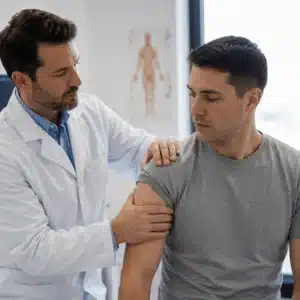
In recent years, SLAP tear care has evolved. When determining who requires a SLAP repair, surgeons are more cautious.
SLAP repair should be performed more frequently in patients under 30, according to a 2025 expert consensus published in the Journal of Shoulder & Elbow Surgery. Surgeons may choose to treat the biceps tendon in patients who are elderly or have less need.
Reoperation rates following biceps tenodesis were lower than those following SLAP repair, at 2.9% versus 10.8%, according to a 2024 Journal of ISAKOS meta-analysis. This did not prove that there is always a better option. The patient still chose the best course of action.
Return to sport can vary. A 2025 American Journal of Sports Medicine review found that about 77.5% of patients returned to sport after superior labral repair. For overhead athletes, return to the same level was lower, near 55.5%.
AI-assisted MRI reading is also being studied. It is still early research. It should not replace a doctor’s exam and imaging review.
Recovery after Dallas shoulder surgery happens gradually. The exact rehabilitation plan depends on whether the patient had a SLAP repair, biceps procedure, fracture treatment, or surgery for another shoulder injury.
| Recovery Stage | Typical Timeframe | Main Goals |
| Protection and pain control | First 1 to 2 weeks | Protect the surgical area, manage swelling and pain, and wear the sling as directed |
| Protected movement | About 2 to 6 weeks | Begin approved gentle motion while avoiding stress on the repaired labrum or biceps |
| Active motion | About 6 to 12 weeks | Gradually restore comfortable shoulder movement and improve everyday function |
| Strengthening | About 3 to 4 months | Rebuild rotator cuff, shoulder blade, and arm strength under professional guidance |
| Return to demanding activity | About 4 to 6 months or longer | Resume heavier work, lifting, throwing, or sports when strength and control are restored |
These timeframes are general estimates. Recovery may take longer when surgery involves a fracture, extensive labral damage, the biceps tendon, or additional shoulder structures.
Patients should follow their surgeon’s restrictions and physical therapy plan. Returning to lifting or sports too early can place unnecessary stress on the healing tissue.
A SLAP tear is damage to the top part of the shoulder labrum. This is where the biceps tendon attaches. It can cause deep pain, clicking, weakness, or pain with overhead motion. We check your symptoms, exam, and imaging before making a diagnosis.
It can happen after a fall, hard pull, collision, or shoulder dislocation. It can also happen from repeated overhead sports like baseball, tennis, volleyball, or weightlifting. In middle age, some labral fraying can come from wear. The cause helps guide treatment.
We start with your history and a shoulder exam. X-rays check for bone problems, including a Dallas shoulder fracture. MRI or MR arthrogram can show labral damage. The imaging must match your pain and exam findings.
No. Most patients start with nonsurgical care. This may include rest, medicine, physical therapy, and sometimes injections. Surgery is considered if pain, weakness, or instability continues. A serious injury may also change the plan.
Many people improve without surgery. Rehab can help restore motion, strength, and shoulder control. This works best when the shoulder is stable and symptoms improve with care. Our team can explain when surgery is worth considering.
Recovery usually takes several months. You may wear a sling at first, then start guided physical therapy. Return to sports or heavy lifting often takes 4 to 6 months or longer. Your timeline depends on the repair, your job, and your goals.
Most SLAP tears do not need surgery right away. The best plan depends on your injury, pain level, shoulder stability, imaging, and response to rehab. Our goal is to give you a clear diagnosis and a treatment plan that fits your life.
Shoulder pain that does not improve should not be ignored. At Sunnyvale Sports Medicine and Orthopedic Surgery Center, we diagnose shoulder injuries, review imaging, and explain care options that fit your needs. Book Now to meet with our team and learn the right next step for your shoulder.
If you are recovering from gluteus medius tear surgery, it helps to know what comes next. Most people use crutches for several weeks, start careful rehab early, and return to many daily tasks within months. Full return to sports may take 8 to 12 months, based on tear size and repair type.

The gluteus medius is a key muscle on the outside of the hip. It helps keep the pelvis level when you walk, climb stairs, or stand on one leg.
A tear can cause outer hip pain, weakness, and a limp. Many tears happen from wear over time. Some can also follow a fall, sports injury, or past hip surgery.
When rest, therapy, and shots do not help, a joint doctor may suggest surgery. Surgery aims to reattach the torn tendon to the bone.
There is no single repair method for every patient. Your surgeon will choose the best option based on tear size, tendon health, and muscle quality.
| Technique | Best For | Key Point |
| Endoscopic repair | Small or moderate tears | Smaller cuts and less soft tissue trauma |
| Mini-open or open repair | Larger or complex tears | Direct view of the tendon and bone |
| Tendon transfer | Chronic tears that cannot be repaired | Used when the tendon cannot be reattached |
Both pain and function can be improved by open and endoscopic treatments, according to a 2024 study published in Current Reviews in Musculoskeletal Medicine. The Journal of ISAKOS published an investigation in 2021 that showed a 3.8% retear rate following repair and a 5.2% overall complication rate.
Gluteus medius tear surgery recovery happens in stages. You should not rush the process. The repaired tendon needs time to heal before it can handle full force.
| Phase | Timeline | Main Goal |
| Phase 1 | 0 to 6 weeks | Protect the repair |
| Phase 2 | 6 to 12 weeks | Restore walking and light strength |
| Phase 3 | 3 to 6 months | Build strength and balance |
| Phase 4 | 6 months and beyond | Return to higher activity |
You will likely use crutches after surgery. Some patients also wear a hip brace. A brace is common, but not every case needs one.
Weight on the mended side may be limited by your surgeon. You can engage in ankle pumps, modest muscle squeezes, and safe range work.
Many individuals begin to gain weight between 6 and 8 weeks. Some people may need additional time.
Light bands, soft bridges, and walking drills could all be used in therapy. The goal is to have a pain-free gait.
Strength training gets more active after three to six months. Side steps, balancing, squats, and low-impact aerobic exercises are all possibilities.
A 2025 JOSPT Open study found that more than 60% of patients reached near-normal hip strength by one year after open repair.
Running, court sports, and impact work may take 6 to 8 months or longer. Contact sports may take 9 to 12 months.
A 2021 Orthopedic Journal of Sports Medicine study found that 67.9% of active patients over 50 returned to their prior activity level within two years.
Your physical therapist will guide each step. Your plan may change based on your pain, strength, and repair type.
Avoid active hip abduction early unless your surgeon allows it. This movement can place stress on the repair.
Pain control helps you move, sleep, and take part in rehab. Your care team may suggest:
Do not take more medicine than prescribed. Call your surgeon if the pain gets worse after early progress.
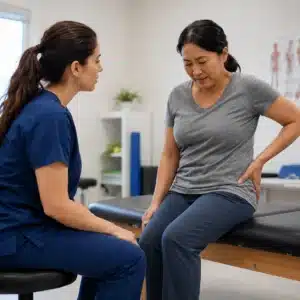
Most people heal without major issues. Still, you should know when to call for help.
Contact your surgeon or orthopedic urgent care if you notice:
These symptoms could indicate a blood clot, nerve discomfort, infection, or repair issues.
Return to activity should be based on strength, walking form, and pain control. Time alone is not enough.
| Activity | Typical Timeline |
| Desk work | 1 to 2 weeks |
| Walking without crutches | Often 8 to 12 weeks |
| Low-impact cardio | 3 to 4 months |
| Running | 6 to 8 months or longer |
| Court or impact sports | 8 to 12 months |
| Contact sports | 9 to 12 months |
Your surgeon or therapist may test hip strength and balance before clearing you. A knee examination may also be done if knee pain, buckling, or leg alignment affects your movement.
Most patients use crutches for several weeks. Many regain easier walking by 8 to 12 weeks. Pain and strength often improve from 3 to 6 months. Full return to sports may take 8 to 12 months.
Many patients wear a brace after repair, but not all do. A brace limits hip motion while the tendon heals. Your surgeon will decide based on the tear, repair strength, and your early movement limits.
Early workouts are gentle. They could include ankle pumps, quad sets, glute sets, and pelvic tilts. These movements promote blood flow and basic muscle function. Do just the workouts that your care team has approved.
A limp is frequent in the early stages of recuperation. It often improves when hip strength recovers. Many patients focus on gait training during therapy. If your limp worsens or does not improve, contact your care team.
If you have significant pain, wound drainage, calf edema, or abrupt dyspnea, contact orthopedic urgent care. If you have any new numbness or a fever, you should also call. These indications require immediate attention.
Yes. After formal therapy is over, continue with your at-home strength program. Early in your recuperation, stay off uneven ground and wear supportive shoes. Stay inside a healthy weight range and only resume sports once you're cleared.
Repairing the gluteus medius can ease discomfort and promote safer mobility. Patience, coordinated rehabilitation, and clear follow-up with your care team are all necessary for recovery. The finest outcomes come from gradually strengthening the repair and safeguarding it early.
Sunnyvale Orthopedics provides hip and lower-body care for tendon injuries, joint pain, and sports injuries. Book an appointment today to meet with a trusted joint doctor and get a recovery plan made for your needs.
A rolled ankle can happen fast. You may step wrong at the gym, twist your foot on a trail, or land badly during a game. If you have ankle injuries in Austin, TX, the right care choice matters. For many sprains, strains, and stable closed injuries, orthopedic urgent care can be a faster and lower-cost option than the ER.
The ER is still the right place for serious trauma, open wounds, numbness, or a foot that looks deformed. But if your injury is painful and not life-threatening, an orthopedic clinic can check your ankle, take X-rays, and start treatment.
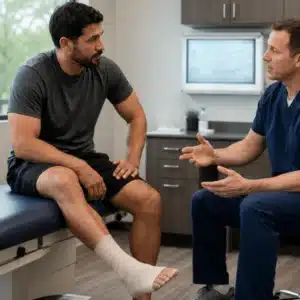
Orthopedic urgent care treats bone, joint, muscle, tendon, and ligament injuries. It is built for problems that need quick care but are not life-threatening.
You can often walk in without a referral. Many clinics offer on-site X-rays, bracing, splints, and follow-up care. Some also connect patients with orthopedic surgeons or physical therapy when needed.
Common injuries treated include:
The goal is simple. You get the right exam, the right imaging, and a clear next step.
You should get checked if ankle pain makes walking hard. You should also seek care if swelling, bruising, or tenderness gets worse.
Mayo Clinic says patients should seek medical care for severe pain, severe swelling, open wounds, deformity, signs of infection, or trouble putting weight on the foot. AAOS also notes that ankle fractures can cause pain, swelling, bruising, deformity, numbness, or trouble bearing weight.
Orthopedic urgent care can help with many common ankle injuries in Austin TX, such as:
| Injury Type | Orthopedic Urgent Care? |
| Mild ankle sprain | Yes |
| Moderate ankle sprain | Yes |
| Severe ankle sprain | Yes, with follow-up |
| Stable closed fracture | Often yes |
| Open fracture | No, go to the ER |
| Numb or cold foot | No, go to the ER |
If you are not sure whether it is a sprain or a fracture, do not guess. Both can cause swelling, bruising, and sharp pain. An X-ray helps rule out a broken bone.
Both places can treat injuries. The best choice depends on how serious the injury looks.
| Factor | Orthopedic Urgent Care | Emergency Room |
| Best for | Sprains, strains, and minor fractures | Severe trauma and emergencies |
| X-rays | Often available | Available |
| Main care team | Bone and joint focused | General emergency care |
| Cost | Often lower | Often higher |
| Wait time | Often shorter | Often longer |
| Follow-up | Often orthopedic-based | May need referral later |
The Urgent Care Association reports an average urgent care visit time of about 56 minutes. FAIR Health Consumer also notes that urgent care is often a lower-cost option than ER care for non-emergency needs.
Costs still depend on your insurance, deductible, network, and clinic. Always check your plan when possible.
A visit for an ankle sprain in Austin, TX, is usually simple.
First, the care team asks how the injury happened. They will check swelling, bruising, pain points, motion, and balance. They may also check blood flow, feeling, and strength in your foot.
If a fracture is possible, they may order an X-ray. X-rays can show many ankle fractures and help guide treatment.
Your treatment may include:
Most ankle sprains heal with rest, support, and time. More serious sprains may need rehab. A fracture may need a boot, cast, specialist follow-up, or surgery based on the break.
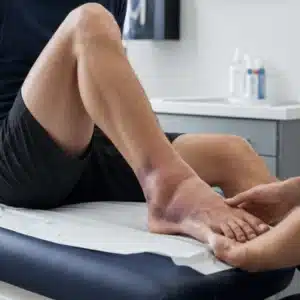
Some ankle injuries should not wait at urgent care. Go to the ER if you have signs of a serious injury.
Choose the ER for:
These symptoms can point to a true emergency. In these cases, the ER is the safer choice.
For a sprained ankle in Austin, TX, without these red flags, orthopedic urgent care is often a good first stop.
You may walk on a mild sprain if the pain is low. Stop if the pain is sharp or the ankle feels weak. Use rest, ice, compression, and elevation for early care. Get checked if walking is hard.
You cannot always tell by symptoms alone. Both injuries can cause pain, swelling, and bruising. Pain over the bone, trouble bearing weight, deformity, or a snap sound can suggest a fracture. An X-ray gives a clearer answer.
Yes, many clinics treat stable closed fractures. They may use X-rays, splints, boots, or braces. More complex fractures may need a specialist or surgery. Open fractures need the ER.
Mild sprains may improve in one to three weeks. Moderate sprains may take several weeks. Severe sprains can take months and may need physical therapy. Healing time depends on the injury and your care plan.
Many health plans cover urgent care. Your cost depends on your plan, copay, deductible, and network. FAIR Health Consumer says most health plans include urgent care centers in their networks. Check your benefits before your visit, when you can.
Ongoing pain may mean the injury needs more care. It could be a deeper sprain, fracture, tendon injury, or cartilage issue. Follow up if swelling stays, walking hurts, or the ankle feels unstable. Early follow-up can help prevent long-term problems.
Yes, many orthopedic urgent care clinics treat sports injuries without an appointment. This can include ankle sprains, strains, minor closed fractures, joint pain, and swelling after a fall or twist. Walk-in availability may vary by clinic, so it is still a good idea to call ahead when possible. If the injury involves severe trauma, heavy bleeding, numbness, deformity, or an open wound, go to the ER instead.
Most ankle injuries in Austin, TX, do not need an ER visit. Orthopedic urgent care can help with sprains, strains, swelling, and many stable closed injuries. You get focused care, imaging when needed, and a clear treatment plan.
If you have an ankle sprain in Austin, TX, or a painful rolled ankle, do not wait and hope it heals on its own. Book now to get your ankle checked and start the right care plan.
Knee pain is common. But that doesn't mean you should ignore it. If you've been searching for a knee joint pain doctor near me, chances are your knee has been bothering you longer than it should. Ordinary soreness fades in a day or two. Pain that keeps coming back, limits your movement, or follows an injury is a different story. This guide helps you decide when it's time to stop waiting and see a knee specialist.

Most people know the difference between regular soreness and something that feels "off." Overuse soreness usually eases with rest. The kind of pain that lingers, swells, or changes how you walk is different.
Common causes that often need a knee joint pain doctor near me to evaluate:
Function matters as much as pain level. If your knee is changing how you move, that's a signal worth acting on.
According to Mass General Brigham, pain lasting more than a few days after an injury is a clear reason for a knee examination.
Sudden swelling after an injury suggests something more than a minor sprain.
Functional loss is a key reason people search for an orthopedic knee specialist near me. If climbing stairs, getting up from a chair, or walking a short distance has become painful, your knee is affecting your quality of life.
According to Mass General Brigham, pain lasting more than a few days after an injury is a clear reason for a knee examination. If your knee aches every morning, flares up on stairs, or has been bothering you on and off for weeks, knee specialists should evaluate it.
Sudden swelling after an injury suggests something more than a minor sprain. A knee joint pain doctor near me should assess:
These are mechanical signs. They often point to ligament, meniscus, or cartilage problems that won't heal on their own.

At Sunnyvale Orthopedics, your knee examination starts with a hands-on physical assessment. Your doctor checks the range of motion, stability, and tenderness. X-rays evaluate bones and joint spacing. An MRI gives a clearer view of ligaments, tendons, and cartilage that X-rays can't show.
In some cases, fluid from the knee joint may be drawn and tested for infection or inflammation. Blood tests can rule out conditions like gout or rheumatoid arthritis. Most evaluations are straightforward and don't require all of these steps.
Some symptoms can't wait for a scheduled visit. If you're looking for a knee joint pain doctor near me because of any of the following, walk-in care may be the right move:
If pain follows an injury and lasts more than a few days, it's worth getting checked. Pain that keeps returning or limits daily activities is also a reason to seek a knee examination. Don't wait until the problem becomes harder to treat.
Not always. Occasional popping without pain is common. But a pop followed by swelling, instability, or limited motion can signal a ligament or meniscal injury. A knee joint pain doctor near me can help determine what the sound means for your specific situation.
These are mechanical symptoms that suggest a structural problem. A knee that locks or gives way often points to issues with the meniscus or ligaments. Knee specialists treat these conditions regularly and can help you regain stability and confidence in your movement.
Not necessarily. Many people improve with nonsurgical treatment alone. Surgery is usually considered only when damage is confirmed, and conservative care hasn't helped. Your orthopedic knee specialist near me will review all options with you first.
A standard knee examination includes a physical assessment followed by X-rays. If soft tissue damage is suspected, an MRI may be ordered. In some cases, fluid or blood testing may also be done. Your doctor will only order what's clinically necessary.
Yes. For more urgent orthopedic needs, Sunnyvale Orthopedics offers walk-in access Monday through Friday from 8:00 to 11:00 AM. Scheduled appointments are recommended for routine evaluations. Contact us to find the right option for your situation.
Persistent knee pain is not something you have to manage on your own. Whether your symptoms have been building for weeks or started with a sudden injury, our knee specialists at Sunnyvale Orthopedics are here to help. We serve Sunnyvale, TX, and the greater Dallas area with expert orthopedic care and real walk-in access when you need it most.
Don't wait for knee pain to get worse. Contact Sunnyvale Orthopedics to book a knee evaluation or ask about same-day availability.