(214) 466-7391


Shoulder pain can stop you from doing the things you love. Whether it's a sports injury, a fall, or chronic aching, knowing when to see an orthopedic shoulder surgeon is important. Not every ache needs surgery. But some injuries do need expert care fast. This guide helps you understand your symptoms and decide what to do next.

Most shoulder pain gets better without surgery. According to the American Academy of Family Physicians (AAFP), about half of patients improve with non-surgical treatment.
Conservative care usually includes:
Give treatment at least 6 to 12 weeks. If you don't improve, it's time to see an orthopedic shoulder surgeon.
Conditions that often respond to conservative care:
Sharp shoulder pain after a fall, car accident, sports hit, or direct blow should be checked quickly.
A shoulder that looks out of place, uneven, swollen, or has a new lump may signal a dislocation, fracture, or joint injury.
If you cannot raise your arm, reach overhead, or move your shoulder normally, the injury may be more serious than a strain.
Numbness, tingling, or weakness may mean a nerve is being affected. This can happen after a dislocation, neck injury, fracture, or severe swelling around the shoulder.
Shoulder pain with fever can be a warning sign of infection. Infection inside or around the joint can become serious if treatment is delayed.
New shoulder pain should be taken seriously if you have a current or past history of cancer. While many causes are not cancer-related, unexplained bone or joint pain needs proper evaluation.
Some symptoms can't wait. Seek care right away if you have any of these:
Sharp shoulder pain after a fall, car accident, sports hit, or direct blow should be checked quickly. It may point to a fracture, dislocation, or major soft tissue injury. Delaying care can make the injury worse and slow your recovery.
A shoulder that looks out of place, uneven, swollen, or has a new lump may signal a dislocation, fracture, or joint injury. This is especially important if the change appeared after trauma. An orthopedic shoulder surgeon can examine the shoulder and order imaging to find the cause.
If you cannot raise your arm, reach overhead, or move your shoulder normally, the injury may be more serious than a strain. This can happen with a severe rotator cuff tear, fracture, or nerve-related injury. Fast evaluation helps protect shoulder function and guides the right treatment plan.
Numbness, tingling, or weakness may mean a nerve is being affected. This can happen after a dislocation, neck injury, fracture, or severe swelling around the shoulder. These symptoms should be checked right away, especially if they are getting worse.
Shoulder pain with fever can be a warning sign of infection. Infection inside or around the joint can become serious if treatment is delayed. Seek urgent medical care if fever, redness, warmth, swelling, or severe pain appear together.
New shoulder pain should be taken seriously if you have a current or past history of cancer. While many causes are not cancer-related, unexplained bone or joint pain needs proper evaluation. A specialist can review your history, symptoms, and imaging to rule out serious causes.
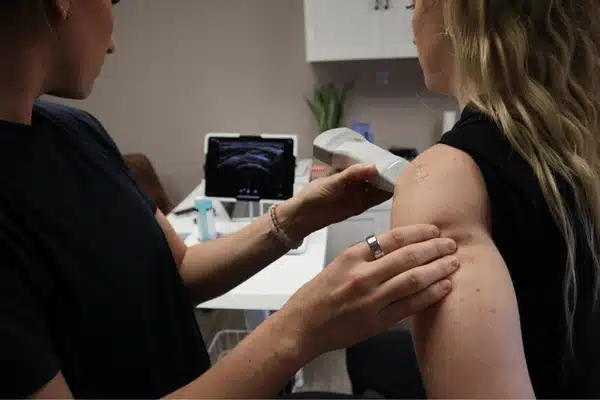
An orthopedic shoulder surgeon is a specialist trained in diagnosing and treating all shoulder conditions. They work alongside a sport medicine doctor to create the right plan for you.
Your first visit typically includes:
As a joint specialist, a shoulder surgeon looks at the full picture. They consider your age, activity level, and goals before recommending surgery.

When conservative management fails, surgery may be the best option. Modern shoulder procedures are frequently performed with small incisions using a technique known as arthroscopy.
Used to treat full-thickness tears. According to studies, 93-97% of patients regain good shoulder function after arthroscopic repair (AAOS, 2025).
For recurrent dislocation. Most patients, particularly athletes under the age of 25, respond favorably to arthroscopic bankart repair.
A shoulder replacement surgeon treats severe arthritis or advanced cuff damage.
Research shows reverse shoulder replacement offers about 88% implant survivorship at 10 years.
For patients with bone loss, an open Latarjet procedure offers strong long-term results.
A sport medicine doctor may co-manage your care before and after surgery to speed up your recovery.
Whether you need a joint specialist, a shoulder replacement surgeon, or guidance from a sport medicine doctor, our team is here for you.
If shoulder pain lasts more than 6 weeks despite rest and therapy, it's time to see an orthopedic shoulder surgeon. Also seek care right away for trauma, weakness, or visible deformity.
Yes, a sport medicine doctor can manage many shoulder conditions with physical therapy, injections, and activity changes. They often work alongside surgeons to give you a full care plan.
A shoulder replacement surgeon is needed when arthritis or severe joint damage limits your daily life. Surgery is considered after non-surgical options have been tried and failed.
A joint specialist checks your range of motion, strength, and pain location. They also review imaging, such as X-rays or MRI, to find the source of your problem.
Most patients wear a sling for 4 to 6 weeks, followed by 3 to 6 months of physical therapy. Full recovery depends on the type of surgery and your overall health.
Sunnyvale Orthopedics accepts most major insurance plans, TRICARE, and workers' compensation. Call our office to confirm your coverage before your visit.
Shoulder problems do not always go away on their own, and the right specialist can make the path forward clearer. At Sunnyvale Sports Medicine and Orthopedic Surgery Center, Dr. John M. Hibbitts brings board-certified expertise and more than 20 years of experience in orthopedic sports medicine, with care for athletes, workers, first responders, and Dallas-area patients with shoulder injuries.
Take the next step toward less pain and better movement. Call Sunnyvale Sports Medicine and Orthopedic Surgery Center at 214-420-7611 or schedule your consultation online with Dr. Hibbitts today.