(214) 466-7391


Medically reviewed by a Texas board-certified orthopedic surgeon and sports medicine specialist. Updated for 2025 knee injury guidance.
Many people deal with knee pain at some point in life. The knee is your body’s largest joint and one of the easiest to injure. Knowing your knee injury symptoms early can help you protect the joint and avoid a longer recovery.
Because the knee has many moving parts, a problem in one area can trigger several knee injury symptoms at once. If your pain, swelling, or instability keeps getting worse, an orthopedic specialist can help you find the cause and the safest next step.

Within your knee joint are three bones: the femur (thighbone), the tibia (shin bone), and the patella (kneecap). These three bones meet to create the knee joint. Articular cartilage covers the ends of your tibia, the femur, and the back of the patella.
The cartilage allows the knee joint bones to smoothly glide against one another as you straighten or bend your leg. The meniscus is a rubbery and tough wedge-shaped cartilage between your femur and tibia. It cushions the joint and acts as a shock absorber.
Four ligaments connect the bones and stabilize the knee joint. The medial collateral ligament (MCL) is on the knee’s inside, while the lateral collateral ligament (LCL) is on the outside. These ligaments help control side-to-side movement.
The cruciate ligaments are within your knee joint and cross over each other to form an “X” shape. The anterior cruciate ligament (ACL) sits in the front of the knee joint, and the posterior cruciate ligament (PCL) sits behind it. These ligaments help control forward and backward motion.
The tendons within the knee connect the muscles to the bones. The quadriceps tendon connects the front thigh muscles to the patella. The patellar tendon connects the patella to the shinbone.
Many knee injuries can occur since several different parts make up the knee. In some cases, more than one structure is affected, which can increase your knee injury symptoms. Here are some of the most common injuries.
The patella, or kneecap, helps protect the joint. When you fall or collide with a person or an object, the kneecap often makes first contact. That can make it more prone to fractures.
Common knee injury symptoms of a fracture include sharp knee pain, swelling, bruising, and trouble putting weight on the leg. The knee may need immobilisation to heal. In some cases, surgery is needed for repair.
A knee dislocation happens when the knee bones come out of place after a large impact, such as a fall, collision, or car accident.
If the joint looks misshapen, feels unstable, or you have numbness, this can be serious. A true knee dislocation can affect blood flow and nerves and should be treated as an emergency. These knee injury symptoms should never be ignored.
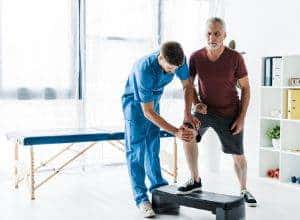
Ligament injuries are very common in sports. They can happen when your knee is overextended or moved in a way it should not naturally move. Because ligaments help keep the knee stable, they can stretch or tear when forced too far.
The cruciate ligaments (ACL and PCL) are commonly injured, but the MCL and LCL can also be affected. Typical knee injury symptoms include a pop at the time of injury, swelling within a few hours, and a feeling that the knee is giving way.
Ligament injuries are often graded based on severity:
Meniscus tears often occur during sports that involve jumping, pivoting, or quick direction changes. They can also happen over time as the cartilage wears down.
Many people notice knee pain along the joint line, swelling, and a catching or locking feeling. These knee injury symptoms may feel worse when squatting or turning.
Tendon tears can happen to anyone but are more common in middle-aged adults and in jumping or running sports. Awkward landings and falls can overload the tendon.
Common knee injury symptoms include pain in the front of the knee, swelling, and weakness when trying to straighten the leg. Some people cannot lift the leg straight without help.
Tell-tale knee injury symptoms include swelling and knee pain. You may also have trouble moving the joint. It may feel stiff, locked up, or like it is catching as you bend and straighten your leg.
If you hear a pop and the knee gives out during the injury, that is a cause for concern. This popping sound can be linked to a ligament or meniscus problem. After a knee injury, the joint may feel unstable, like you cannot stand firmly on the leg.
Many people ask about the causes of knee popping and pain because it can feel scary. Some popping is harmless, especially if there is no knee pain. But painful popping that comes with swelling, locking, or giving way is one of the more important knee injury symptoms to take seriously.
Common causes include:

Many people look up how to test for knee ligament injury when the knee feels loose or wobbly. These checks do not diagnose an injury, but they can help you decide if you need an exam.
Important safety note: If your knee pain is severe, swelling is rapid, or you cannot bear weight, do not force any test. Seek medical care.
Here are a few gentle ways to approach how to test for knee ligament injury at home:
Take a few steps on flat ground. If the knee gives out or feels unstable, stop and rest.
Swelling that shows up quickly (within a few hours) is a warning sign for a more serious injury.
Lie down and lift the injured leg straight. If you cannot lift it, or it triggers sharp pain, stop.
Step down slowly from a low step. If you feel sharp knee pain or instability, stop right away.
If you are not sure how to test for knee ligament injury safely, avoid hands-on stress tests. Clinicians use specific tests to check ligament integrity., such as a completely torn ligament, cannot heal independently, and they'll need to be operated on.
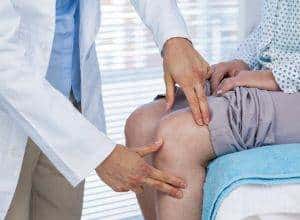
If the knee pain is mild, it is possible you did not damage it further and it is just sore from overuse. You can often treat this type of pain using the RICE method: rest, ice, compression, and elevation.
When you have severe pain, swelling, bruising, locking, or instability, it is important to get treatment. Ignoring a problem can turn a minor sprain into a bigger injury.
Among the first steps of treating a knee injury is stabilising the joint. A provider may recommend a brace to limit motion and support healing. Crutches may also help you avoid putting weight on the injured leg.
Physical therapy often involves several weeks of stretches and exercises to restore function. A therapist can also help strengthen the muscles around the joint to reduce knee pain and improve stability.
Surgery may be needed in some cases to fully restore function, especially with a complete ligament tear, some fractures, or a meniscus tear that keeps locking. Many surgeries can be done arthroscopically using small tools and small incisions. In other cases, a larger incision is needed to repair the injury.
If your knee injury symptoms are not improving, getting the right diagnosis can help you avoid further damage and get back to normal movement sooner.
Not always. Some popping is normal. But if you also have swelling, locking, or knee pain, those can be key knee injury symptoms.
Sometimes, yes. But the knee may feel unstable and can give out. If those knee injury symptoms show up, get checked.
Imaging is often needed after a major impact, visible swelling, locking, or knee pain that does not improve. X-rays assess bone injury. MRI helps evaluate ligaments, cartilage, and meniscus.
Seek care if your knee pain started after trauma, or if you have swelling, warmth, redness, locking, or instability.
Common causes include meniscus tears, ligament injury, cartilage damage, and loose bodies inside the joint.