1
Rest Painful Areas
Pause or reduce activities that trigger or worsen your pain.


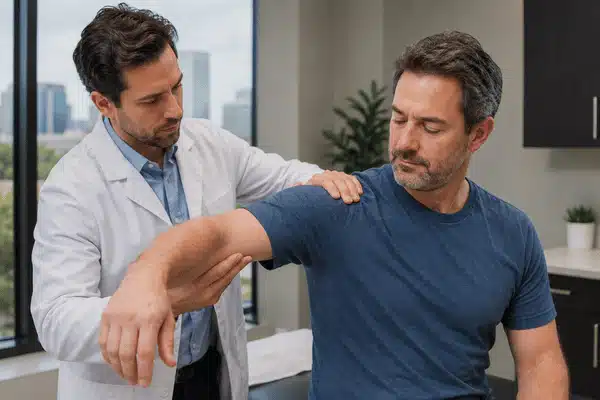
Shoulder pain can make simple tasks hard. Reaching for a shelf, getting dressed, or sleeping on one side may suddenly feel painful. A Dallas shoulder specialist can check what is causing the pain and help you choose the right treatment. See one if pain lasts more than 2 weeks, wakes you at night, or makes it hard to lift your arm. After a fall, crash, or sports injury, get urgent care if the shoulder looks out of place, swells quickly, or will not move.

Urgent care is not necessary for every sore shoulder. Rest, ice, and gentle movement can help ease a mild strain. An appropriate examination is necessary for pain that recurs frequently or restricts day-to-day activities.
Make an appointment with a shoulder physician in Dallas if you observe:
If you experience pain following a fall, auto accident, or sports injury, get same-day care. If the shoulder appears uneven, feels unsteady, or you are unable to raise your arm, this is more critical.
A primary Dallas shoulder specialist can help with minor aches. A shoulder specialist is often the better choice for repeat pain, complex injuries, and problems that may need imaging, injections, or surgery.
The shoulder moves more than the majority of the body's joints. You can reach, lift, throw, and carry more easily with that broad motion. Additionally, it increases the likelihood of straining or injuring the joint.
Typical reasons consist of:
Shoulder pain can happen during sports, work, or daily chores. Tennis, swimming, baseball, lifting boxes, and overhead work are common triggers. Children and teens should be checked sooner if pain lasts, since growth plates can also be injured.
A specialist will first ask how the pain started. They may ask what movements hurt, what makes symptoms better, and whether there was an injury.
The exam often checks:
Imaging may be used when the exam points to a deeper injury or when pain does not improve.
| Test | What It Helps Show |
| X-ray | Fractures, arthritis, and bone alignment |
| MRI | Rotator cuff, labrum, tendons, soft tissue |
| Ultrasound | Tendon movement and some soft tissue tears |
| CT scan | Complex fractures or bone detail |
The American College of Radiology notes that imaging should match the injury, symptoms, and exam findings. An MRI is not always the first step for new shoulder pain without red flags.
Many shoulder problems improve without surgery. The right plan depends on the cause, pain level, and how much the injury affects daily life.
Simple measures may help ease new pain, swelling and muscle tightness.
Pause or reduce activities that trigger or worsen your pain.
Use a wrapped cold pack for recent pain or visible swelling.
Warmth may help relax tight, stiff or tense muscles.
Use over-the-counter medicine only when it is safe for you.
Begin comfortable range-of-motion exercises without forcing movement.
Common first steps include:
Physical therapy is often a key part of recovery. It can help improve motion, build rotator cuff strength, support better posture, and lower the chance of another injury.
Injections may help when pain makes therapy difficult. Steroid injections can calm swelling and reduce pain for some shoulder problems. Platelet-rich plasma, or PRP, may also be discussed in selected cases. Research shows results can vary, so your doctor should explain the possible benefits, limits, risks, and costs.

A Dallas shoulder surgeon may discuss surgery when pain continues after non-surgical care or when imaging shows serious damage. Surgery may also be considered for major tears, repeat dislocations, severe arthritis, or injuries that affect work and daily life.
Common procedures include:
Arthroscopic surgery uses small cuts and a camera to view the joint. It may allow the surgeon to repair damaged tissue with less cutting than open surgery. Even with smaller cuts, recovery still takes time. Most patients need guided therapy after the procedure.
Current shoulder care also includes 3D surgical planning, outpatient shoulder replacement for selected patients, and FDA-cleared spacer options for some massive rotator cuff tears that cannot be repaired. These tools are not right for every patient. They help the surgeon plan care based on the injury, age, activity level, and health history.
Sunnyvale Sports Medicine and Orthopedic Center serves patients in Sunnyvale, Dallas, and nearby areas. Dr. John M. Hibbitts is a Texas board-certified orthopedic surgeon with more than 25 years of experience. Dr. Reed Bartz also brings fellowship training in sports medicine and shoulder surgery. The team treats shoulder injuries with both non-surgical care and surgical options.
See a specialist if pain lasts more than 2 weeks, gets worse, or limits your movement. Night pain is also a reason to get checked. Sudden weakness, swelling, or deformity after an injury needs urgent care.
No. Shoulder pain can come from tendon irritation, bursitis, arthritis, stiffness, or pain in the neck. A tear is more likely when pain comes with weakness or trouble lifting the arm. A proper exam helps find the cause.
Mild pain may improve with rest, ice, heat, and gentle movement. Avoid lifting, reaching, or participating in sports that make the pain worse. See a doctor if symptoms do not improve or keep coming back.
A Dallas shoulder doctor checks your symptoms, movement, strength, and exam findings. They may order imaging if needed. Treatment may include therapy, medicine, injections, or surgery.
No. Many people improve with therapy, activity changes, and pain control. Dallas shoulder surgery is usually reserved for larger tears, repeat instability, severe arthritis, or pain that does not improve with other care.
Recovery depends on the injury and the procedure. Smaller repairs may allow light activity sooner. Larger rotator cuff repairs or shoulder replacement can take several months of therapy.
Shoulder pain is common, but lasting pain should not be ignored. Early care can help protect motion, strength, and daily comfort. To learn more, book an appointment with a Dallas shoulder specialist at Sunnyvale Sports Medicine and Orthopedic Center today.