(214) 420-7611


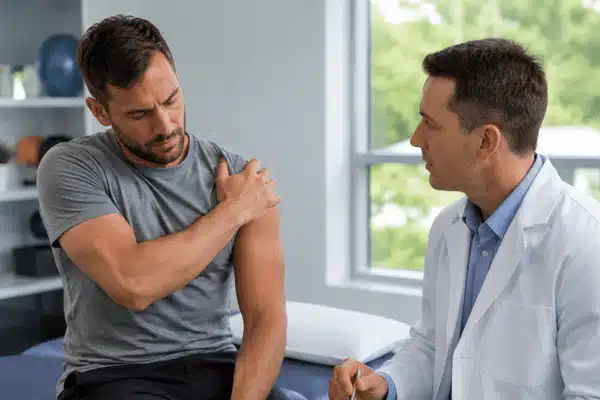
A Dallas slap tear is a tear in the top part of the shoulder labrum. This is where the biceps tendon attaches. Most people do not need surgery right away. We often start with rest, medicine, physical therapy, and sometimes injections. Surgery may be needed when pain persists, the shoulder feels loose, or trauma causes another injury, such as a Dallas shoulder fracture.
A SLAP tear and a fracture are not the same injury. A fracture is a broken bone. A SLAP tear is soft tissue damage. Both can happen after the same fall, hit, or sports injury.
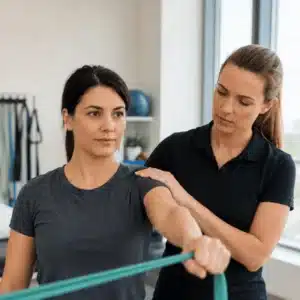
The first step for most SLAP tears is nonsurgical care. The American Academy of Orthopaedic Surgeons says most SLAP injuries start with nonsurgical treatment.
Care may include:
The National Athletic Trainers’ Association recommends 3 to 6 months of nonsurgical care before surgery is considered. Therapy often works on the rotator cuff, shoulder blade muscles, motion, and shoulder control.
The labrum is a ring of cartilage around the shoulder socket. It helps keep the ball of the upper arm bone centered in place.
SLAP means Superior Labrum Anterior to Posterior. This means the tear runs across the top part of the labrum. It can affect the biceps anchor.
Common signs include:
Clicking alone does not prove a SLAP tear. We compare your symptoms, exam, and imaging before making a diagnosis.
A Dallas slap tear can happen from one injury or from repeated stress.
| Cause | Common Example |
| Sudden trauma | Falling on an outstretched arm |
| Sports stress | Throwing, serving, lifting, or swinging |
| Shoulder instability | A dislocation or repeated slipping |
| Age-related wear | Labral fraying in middle age |
A fall, car crash, or direct hit can also cause a Dallas shoulder fracture. This is why X-rays are often needed after trauma.
A SLAP tear is not diagnosed from one test alone. We look at the full shoulder, not just the MRI report.
Diagnosis may include:
We inquire as to how the discomfort began and what exacerbates it.
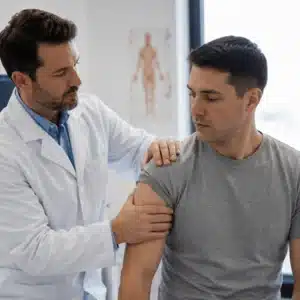
We check shoulder motion, strength, stability, and tenderness. A doctor may also use several examination maneuvers:
These tests provide clues, but none can confirm a SLAP tear by itself. Results must be considered alongside the patient’s history, other examination findings, and imaging.
X-rays are useful in detecting joint alignment, arthritis, and fractures.
Soft tissue is examined using MRI. Dye is used in an MR arthrogram to make the labrum more visible.
This lets a surgeon see inside the shoulder. It is often used when surgery is already being planned.
A 2025 JSES International meta-analysis found MRI has high specificity but only moderate sensitivity for SLAP tears. In simple terms, MRI can help confirm a tear, but it may not catch every tear.
A SLAP tear is not diagnosed from one test alone, so doctors combine the patient’s history, physical examination, and imaging results.
The doctor reviews how the pain began and which activities, movements, or positions make it worse.
Shoulder motion, strength, stability, and tenderness are assessed through several examination maneuvers.
Deep pain or clicking during resisted arm positions may suggest irritation of the labrum or biceps anchor.
Pain at the front of the shoulder during resisted arm elevation may indicate biceps-related irritation.
Pain, catching, or clicking while the shoulder is loaded and rotated may suggest a labral injury.
X-rays can identify fractures, arthritis, alignment problems, and other possible causes of shoulder pain.
MRI examines soft tissue, while an MR arthrogram uses dye to make the labrum easier to see.
Arthroscopy allows the surgeon to directly inspect the inside of the shoulder when surgery is planned.
Surgery is not always needed for a SLAP tear. Many patients improve with therapy and time.
We may discuss surgery when:
Dallas shoulder surgery for a SLAP tear is often done with arthroscopy. This uses small cuts, a camera, and small tools.
Surgical options may include:
The right choice depends on your age, injury, activity level, and goals.
In recent years, SLAP tear care has evolved. When determining who requires a SLAP repair, surgeons are more cautious.
SLAP repair should be performed more frequently in patients under 30, according to a 2025 expert consensus published in the Journal of Shoulder & Elbow Surgery. Surgeons may choose to treat the biceps tendon in patients who are elderly or have less need.
Reoperation rates following biceps tenodesis were lower than those following SLAP repair, at 2.9% versus 10.8%, according to a 2024 Journal of ISAKOS meta-analysis. This did not prove that there is always a better option. The patient still chose the best course of action.
Return to sport can vary. A 2025 American Journal of Sports Medicine review found that about 77.5% of patients returned to sport after superior labral repair. For overhead athletes, return to the same level was lower, near 55.5%.
AI-assisted MRI reading is also being studied. It is still early research. It should not replace a doctor’s exam and imaging review.
Recovery after Dallas shoulder surgery happens gradually. The exact rehabilitation plan depends on whether the patient had a SLAP repair, biceps procedure, fracture treatment, or surgery for another shoulder injury.
| Recovery Stage | Typical Timeframe | Main Goals |
| Protection and pain control | First 1 to 2 weeks | Protect the surgical area, manage swelling and pain, and wear the sling as directed |
| Protected movement | About 2 to 6 weeks | Begin approved gentle motion while avoiding stress on the repaired labrum or biceps |
| Active motion | About 6 to 12 weeks | Gradually restore comfortable shoulder movement and improve everyday function |
| Strengthening | About 3 to 4 months | Rebuild rotator cuff, shoulder blade, and arm strength under professional guidance |
| Return to demanding activity | About 4 to 6 months or longer | Resume heavier work, lifting, throwing, or sports when strength and control are restored |
These timeframes are general estimates. Recovery may take longer when surgery involves a fracture, extensive labral damage, the biceps tendon, or additional shoulder structures.
Patients should follow their surgeon’s restrictions and physical therapy plan. Returning to lifting or sports too early can place unnecessary stress on the healing tissue.
A SLAP tear is damage to the top part of the shoulder labrum. This is where the biceps tendon attaches. It can cause deep pain, clicking, weakness, or pain with overhead motion. We check your symptoms, exam, and imaging before making a diagnosis.
It can happen after a fall, hard pull, collision, or shoulder dislocation. It can also happen from repeated overhead sports like baseball, tennis, volleyball, or weightlifting. In middle age, some labral fraying can come from wear. The cause helps guide treatment.
We start with your history and a shoulder exam. X-rays check for bone problems, including a Dallas shoulder fracture. MRI or MR arthrogram can show labral damage. The imaging must match your pain and exam findings.
No. Most patients start with nonsurgical care. This may include rest, medicine, physical therapy, and sometimes injections. Surgery is considered if pain, weakness, or instability continues. A serious injury may also change the plan.
Many people improve without surgery. Rehab can help restore motion, strength, and shoulder control. This works best when the shoulder is stable and symptoms improve with care. Our team can explain when surgery is worth considering.
Recovery usually takes several months. You may wear a sling at first, then start guided physical therapy. Return to sports or heavy lifting often takes 4 to 6 months or longer. Your timeline depends on the repair, your job, and your goals.
Most SLAP tears do not need surgery right away. The best plan depends on your injury, pain level, shoulder stability, imaging, and response to rehab. Our goal is to give you a clear diagnosis and a treatment plan that fits your life.
Shoulder pain that does not improve should not be ignored. At Sunnyvale Sports Medicine and Orthopedic Surgery Center, we diagnose shoulder injuries, review imaging, and explain care options that fit your needs. Book Now to meet with our team and learn the right next step for your shoulder.