(214) 420-7611


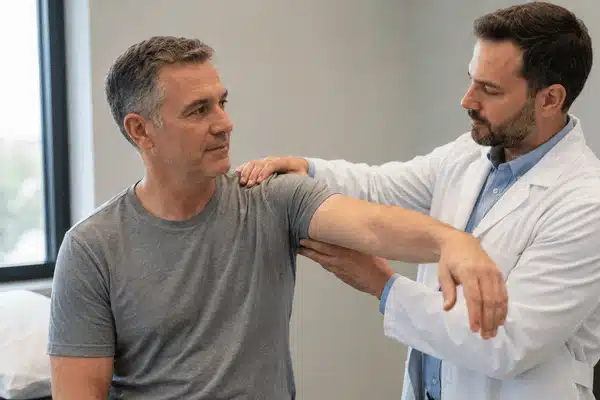
Knowing when not to have rotator cuff surgery can help you avoid an operation you may not need. An MRI may show a tear, but the scan is only one part of the decision. Your pain, strength, health, tear size, and daily routine all matter. Many people with gradual tears improve through therapy and careful activity changes.
During a standard rotator cuff surgery, the surgeon places the torn tendon back against the upper arm bone. Small anchors may hold it in place while it heals.
Nonsurgical care has a different goal. It does not close the tear. Instead, it helps ease pain, restore motion, and strengthen the muscles that support the shoulder.
The American Academy of Orthopedic Surgeons updated its recommendations for rotator cuffs in 2025. The group found that both physical therapy and surgery can improve function and lessen pain in some full-thickness tears.
| Treatment | Main purpose | What to keep in mind |
| Nonsurgical care | Reduce pain and improve use | The tear may remain or grow |
| Rotator cuff surgery | Repair the torn tendon | Recovery takes several months |
| Follow-up care | Check pain, strength, and motion | Repeat exams may be needed |
Some rotator cuff tears are found by chance. A scan may have been ordered for stiffness, arthritis, or another shoulder issue.
Surgery may not be needed when you have little pain, good strength, and normal arm use. Your doctor may choose to watch the tear and check for changes over time.
Follow-up still matters. Some painless tears become larger or start causing symptoms later.
A strong case for continuing nonsurgical treatment is consistent improvement. You may have better sleep, more mobility, more strength, or less pain at night.
Adults with progressive, full-thickness tears were monitored in a 2024 MOON Shoulder Group study. Over 70% had not opted for surgery after a decade.
A lot of people start with guided therapy for six to twelve weeks. That timetable is not set in stone. The plan is influenced by your age, type of tear, work demands, and progress.
A partial tear affects only part of the tendon. It does not go through the full thickness.
Low- and mid-grade partial tears often receive physical therapy first. Treatment may also include changes to lifting, sports, or other painful tasks.
Surgery may be discussed when pain or weakness continues after a full course of care. The 2025 AAOS guideline notes that research on these tears is still limited, so treatment must fit the individual patient.
Most rotator cuff repairs are planned procedures. This gives your care team time to address health risks before surgery.
Poor blood sugar control, an active infection, or other medical concerns may delay an operation. Your surgeon may also wait if you cannot use a sling or attend therapy after the procedure.
A repair needs protection during the early healing stage. It may be safer to wait until you have the right health and home support in place.
A long-term tear may pull away from the bone. The tendon can become thin, while the nearby muscle may shrink or develop fatty changes.
In these cases, a normal repair may not hold well. Physical therapy may still reduce pain and help you use the arm.
Other treatments may be considered when the function remains poor. Options depend on your age, joint health, strength, and personal goals.
People often search for how to heal a torn rotator cuff naturally because they want to avoid surgery. Most full tendon tears do not seal themselves back onto the bone. Even so, the shoulder can feel and work much better without an operation.
A nonsurgical plan may include:
Regular PRP injections for rotator cuff tendinopathy or partial tears are not recommended by the 2025 AAOS guideline. Before purchasing any treatment marketed as a tendon cure, find out what the evidence indicates.
Do not copy random shoulder exercises from social media when pain is sharp. The wrong movement may make symptoms worse. A doctor or physical therapist can show you what is safe.
Waiting is not always the best choice. Arrange a prompt shoulder exam after a fall, collision, or sudden pulling injury.
You should also seek care when you have:
These symptoms do not guarantee surgery. They do imply that more treatment options could be preserved by early care.
The AAOS lists recent injury, major weakness, and larger tears among the factors that may make surgery more useful.
Rotator cuff surgery recovery takes place in stages. At first, the repair must be protected. Most patients wear a sling and limit active shoulder use.
Guided motion usually begins before strength work. The exact timing depends on the size of the tear and the surgeon’s plan.
Many patients regain useful motion and strength within four to six months. Full recovery may take up to a year. Healing speed, work duties, age, and tear size can all affect the timeline.
Pain and function may improve with therapy, rest, and activity changes. The tear may still remain. Some tears grow over time, so your doctor may suggest repeat exams or imaging.
Most full-thickness tears do not close back onto the bone by themselves. However, nearby muscles can become stronger. This may reduce pain and make the shoulder easier to use.
No. Some small or medium tears respond well to therapy. Surgery may matter more after a recent injury, major weakness, or failed nonsurgical care.
Six to twelve weeks is a common starting period for gradual tears. You may continue longer when pain and function keep improving. New weakness or a recent injury should be checked sooner.
Yes. Some tears become larger and develop muscle changes. These changes may lower the chance of a strong repair. Regular follow-up helps your doctor spot problems early.
Useful motion and strength often return within four to six months. Full recovery may take several more months. Some patients need up to one year before the shoulder feels fully restored.
There is no single rule for choosing therapy or rotator cuff surgery. The right choice depends on your symptoms, tear, health, and goals. Book a shoulder evaluation with Sunnyvale Orthopedics today to get a treatment plan built around your needs.